
Resources
Resources
This is the second in a series on classroom pedagogy, examining how instructional choices shape student thinking.
We all want our students to think—not just memorize or check a box, but truly wrestle with ideas. One simple way to make that happen is by anchoring instruction in a specific thinking skill. This gives lessons focus and gives students a clear target for meaningful learning.
One tool that helps teachers choose these skills intentionally is Bloom's Taxonomy, a pyramid that organizes thinking skills from lower-order to higher-order. At the base are foundational skills like identifying and describing. Higher up are analyzing and evaluating, which push students into more complex reasoning. At the very top is creating.
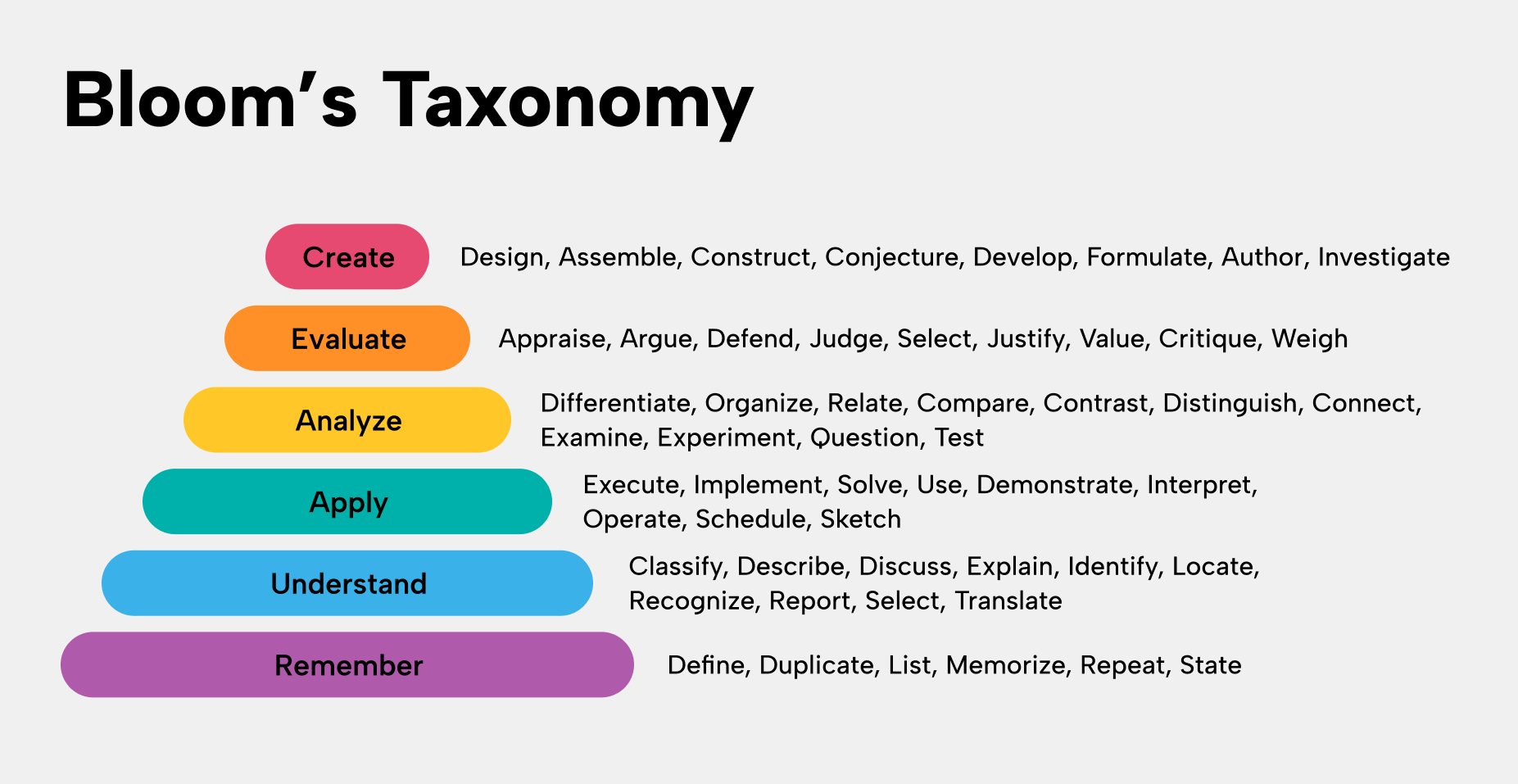
Higher-order thinking goes beyond memorizing facts or following procedures. It’s when students actively work with ideas, make connections, and reason through complexity. Superstructures supports this by giving students structured spaces to engage deeply with content. Students can map ideas, compare perspectives, defend reasoning, and build connections, all within a framework that guides their thinking.
Analyzing helps students break ideas into parts to understand relationships. They differentiate, compare, and classify information to uncover meaning others might miss. Analysis challenges students to see patterns and organize complex material. Learners can explore similarities and differences using a Venn structure, place ideas on a Spectrum structure to see where they fall along a continuum, or analyze where ideas exist along two dimensions with a Dot Plot. Analyzing pushes students to uncover insights and understand ideas deeply.
Evaluation is about judging the quality or validity of ideas. Students argue a position, defend reasoning, and justify choices. It challenges them to weigh evidence and consider multiple perspectives. To practice evaluating, you might have students use a Debate structure to defend a claim, a Spectrum to place ideas along a continuum, or a Poll to vote and justify their reasoning. Evaluating pushes students to think critically and make reasoned judgments about ideas.
When students create, they produce something new. They assemble ideas in original ways. They construct solutions and formulate their thinking into tangible outcomes. Creation challenges students to apply knowledge and explore possibilities. Students can practice creating by using a Sequence structure to show different approaches to the same question, a Web as a project map to plan an invention, or Connect as a concept collage to combine ideas into one cohesive whole. Creating pushes students to take ownership of their ideas and turn thinking into something original.
Choosing a thinking skill isn’t just a requirement on a learning target—it’s a tool for shaping lessons that help students think more deeply and purposefully. When you let it guide your lesson planning, every activity and discussion is intentionally aligned to develop the thinking you want to see. Anchoring instruction in a thinking skill turns a simple learning target into a roadmap for real, higher-order learning.