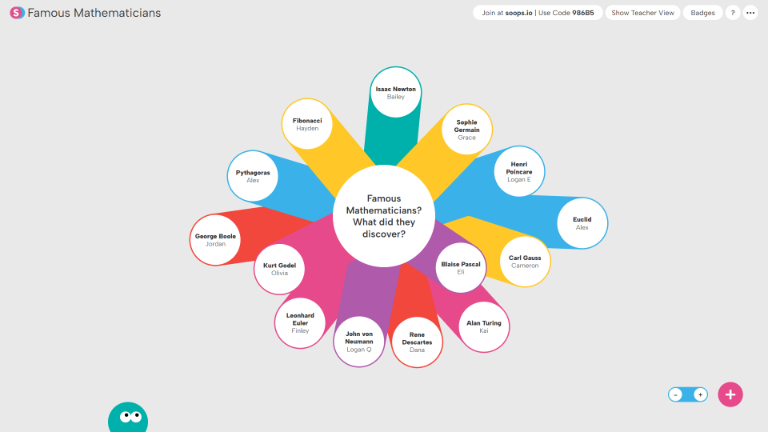
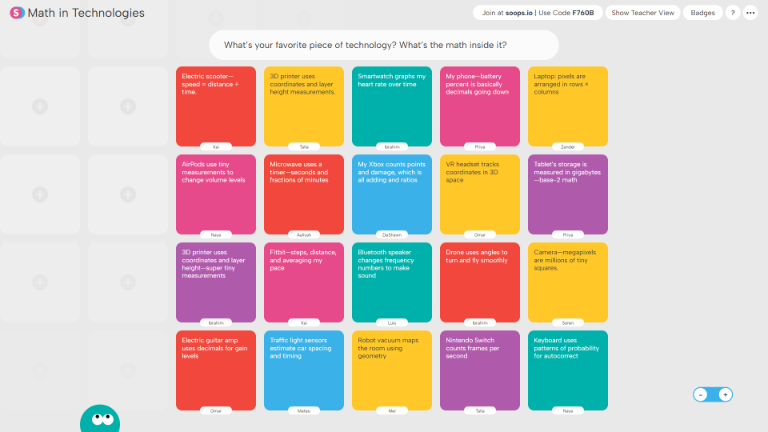
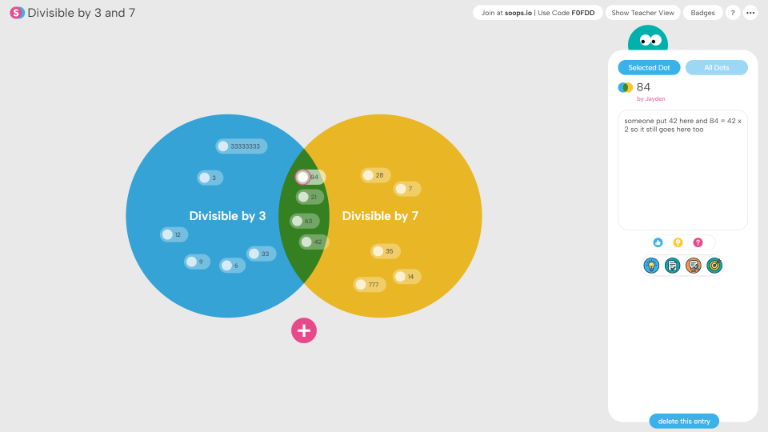
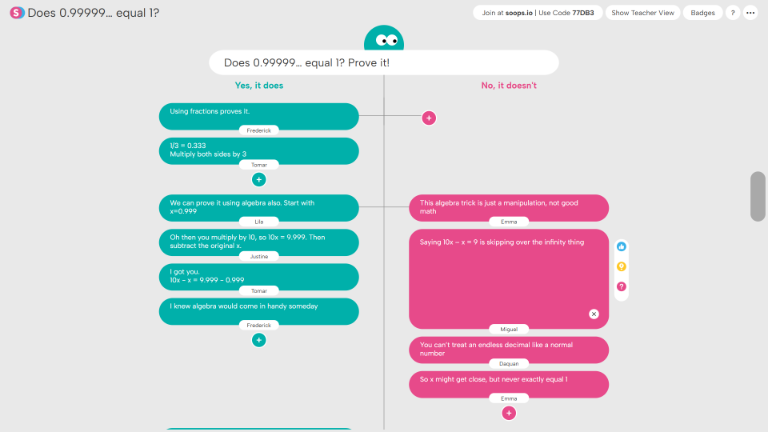
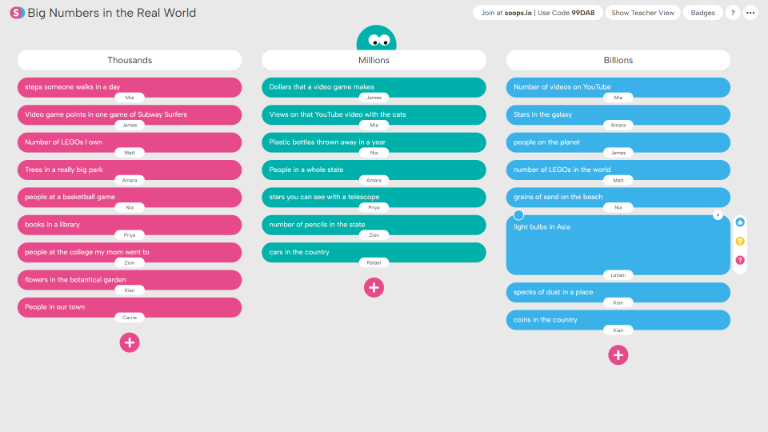
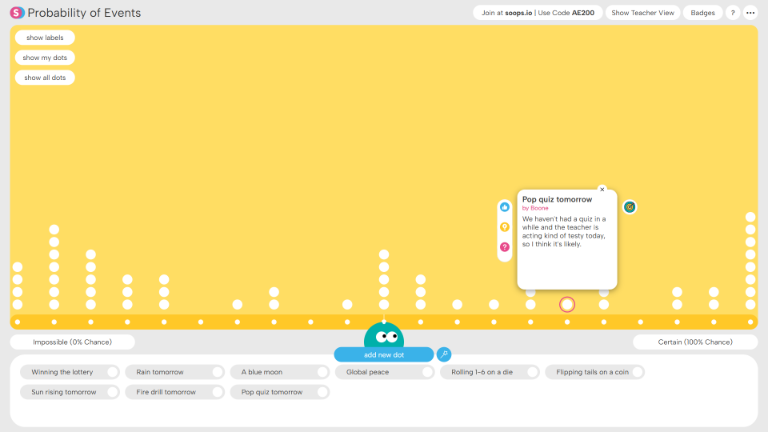
Superstructures gives the whole class a space to engage in mathematical discourse and explore ideas about numbers, patterns, and relationships. Additionally, Superstructures helps students connect mathematical concepts to real-world contexts and careers where math plays an important role. Students contribute ideas simultaneously—making conjectures, explaining their reasoning, and connecting concepts—while seeing how their classmates think in real time. Structured formats support core mathematical thinking skills such as logical reasoning, justification, and generalization, helping students build strong conceptual foundations. The result is a classroom where reasoning is visible and students engage confidently in collaborative mathematical thinking.
Create the Superstructure and share its class code with your students. As you introduce the structure topic, also share learning goals, discuss norms, and set expectations for student responses. Tell students to click the "Watch Help Video" button when they enter the structure.
Encourage students as they work and ask guiding questions along the way. Refer to the Class Insights panel in the Teacher View for helpful notes and perspective on class activity. Monitor the Student Progress panel to celebrate student successes and identify those who need extra support.
Lead your class in a discussion. We recommend discussing patterns, clusters, and outliers in student thinking. Celebrate students who've earned badges. Utilize Class Insights in Teacher View for helpful ideas.
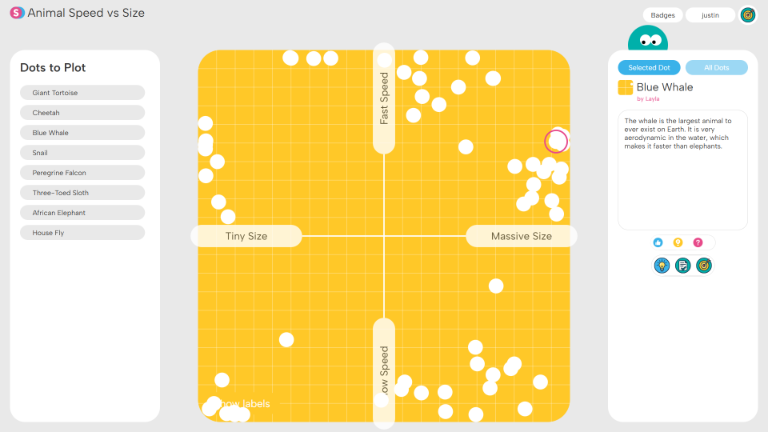
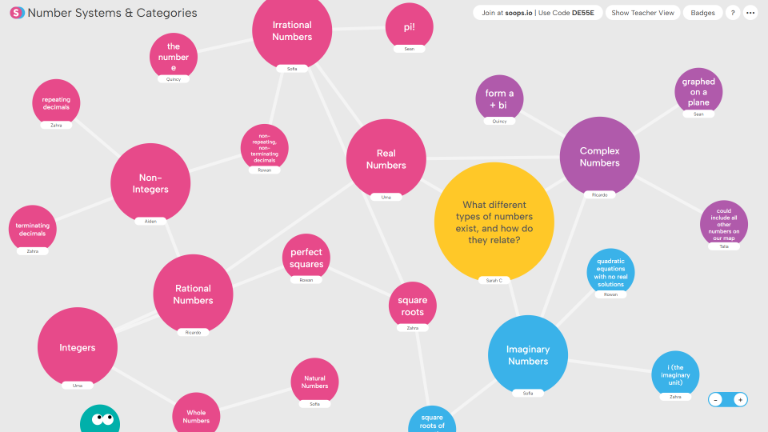
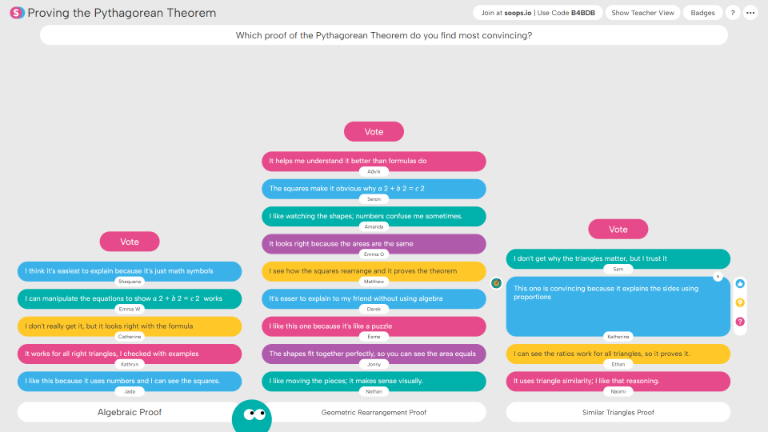
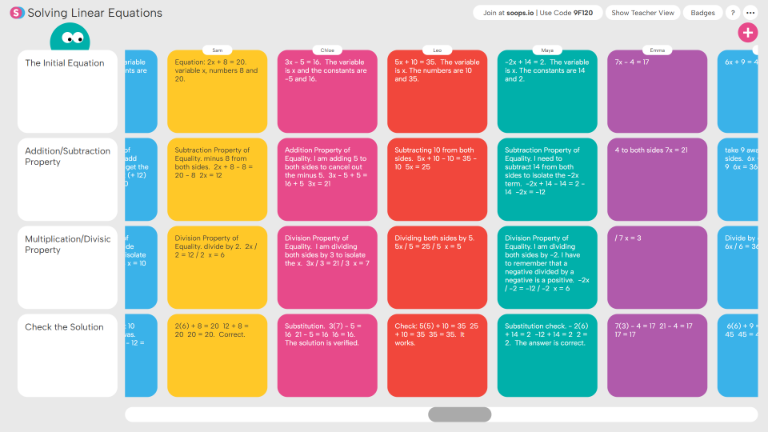
This guide highlights a set of Math examples for each of the ten Superstructures. Each structure title links to its section in the Structures Guide, and each screenshot links to a completed sample. You’ll also find links for ready-to-use structure templates, which you can use as-is or adapt for your own classroom.
Check out The Thinking Classroom: Math for more complete explanations and ideas, regularly updated for your math classroom.