
Resources
Resources
Being a subject-matter expert is one thing—knowing how to think like one is another. Historians, psychologists, and economists each approach their disciplines with distinct habits of mind. These three ready-to-use structures invite students to think like the experts, applying disciplinary reasoning to concepts in psychology, US history, and economics. Take a look.
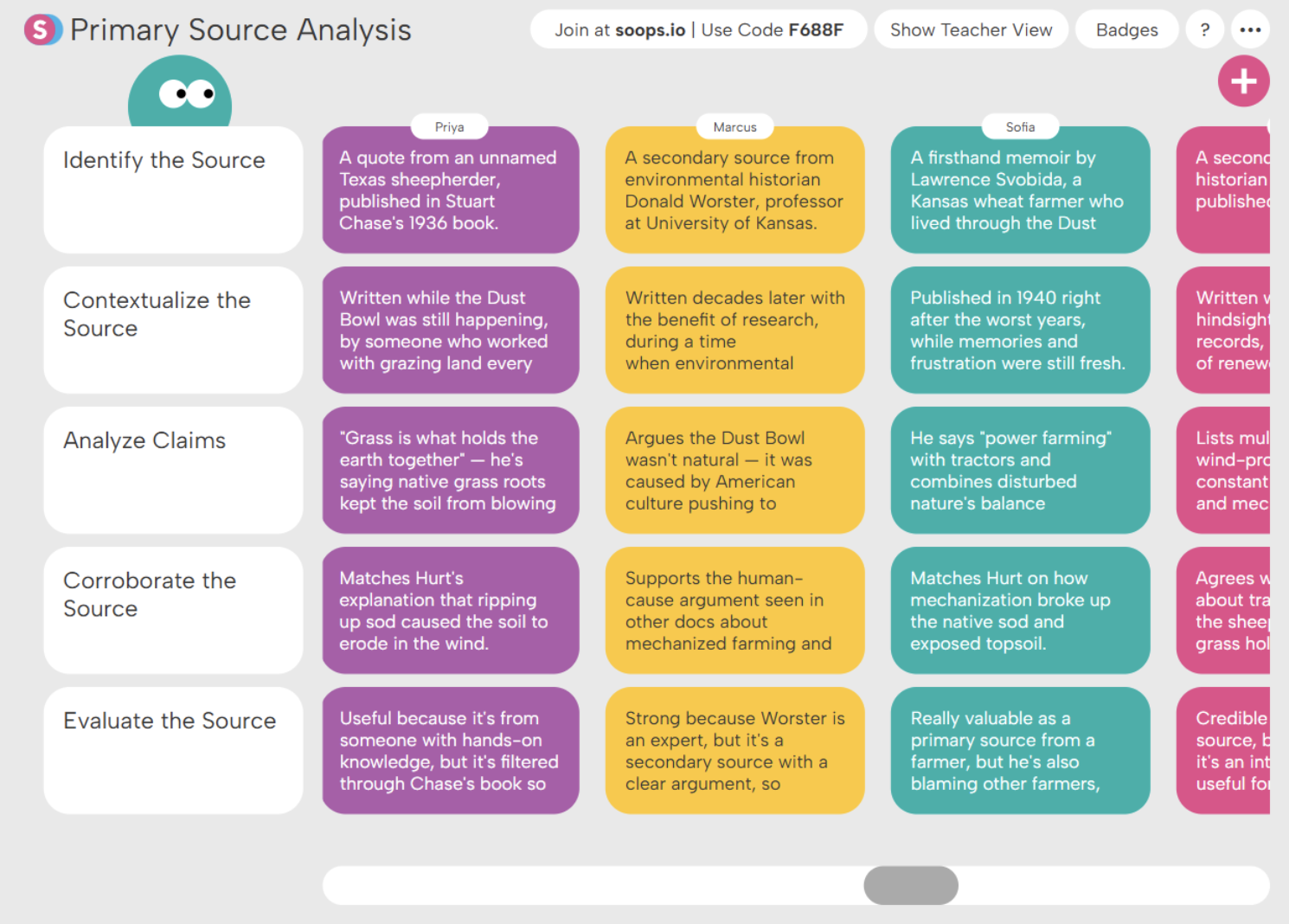
The Sequence structure walks students through the five moves historians make with every primary source: identify, contextualize, analyze, corroborate, and evaluate. As students apply this framework to real documents—letters, memoirs, and historians' analyses—they build a transferable habit of source analysis they can use across any unit. Use this structure in your classroom!
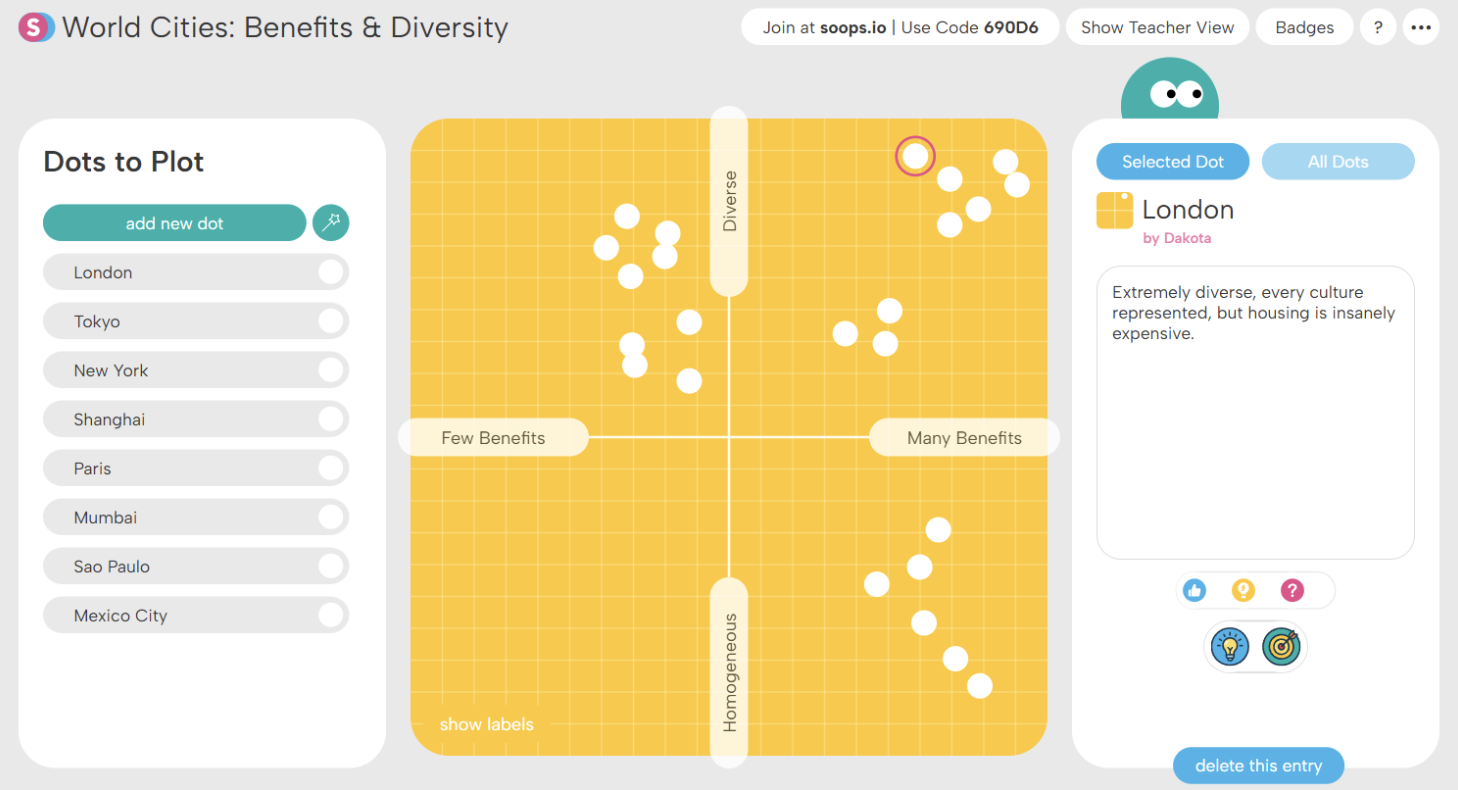
The Dot Plot structure asks students to map global cities the way geographers do — placing London, Tokyo, Mumbai, and others along axes of benefits and diversity to reveal the patterns and tradeoffs that define urban life. As students plot each city and explain their reasoning, they practice the spatial thinking and comparative analysis that geographers use to make sense of how places differ. Use this structure in your classroom!

The Venn structure asks students to compare fiscal and monetary policy the way economists do by weighing the role of tools, goals, and decision-makers. Students move byeond memorizing definitions as they analyze how the two policy levers actually work together to shape the economy. Use this structure in your classroom!
When students step into the habits of mind that define a discipline, they stop seeing content as something to memorize and start seeing it as something to reason with. We hope these structures spark that shift in your classroom.