
Resources
Resources
Across social studies, some of the most important ideas are still debated. Is the constitution effective? Was it fair to blame Germany for World War I? Did the Industrial Revolution improve quality of life? This set of structures brings these questions into the classroom, asking students to weigh evidence, compare perspectives, and explain their reasoning. Take a look.

Want to get a room full of students really talking about government? Ask them whether the U.S. Constitution creates an effective system of government and watch the room split into clear, evidence-based positions. This Debate structure pushes students to defend their stance with historical and contemporary evidence, turning a foundational civics question into a rigorous, evidence-driven argument. Use this structure in your classroom!

This Debate structure centers a question that still invites disagreement: Was it fair to blame Germany for World War I? Students build claims, respond to counterarguments, and weigh evidence from multiple perspectives. As ideas develop across the class, students see how responsibility can be interpreted in different ways depending on how evidence is used. Use this structure in your classroom!
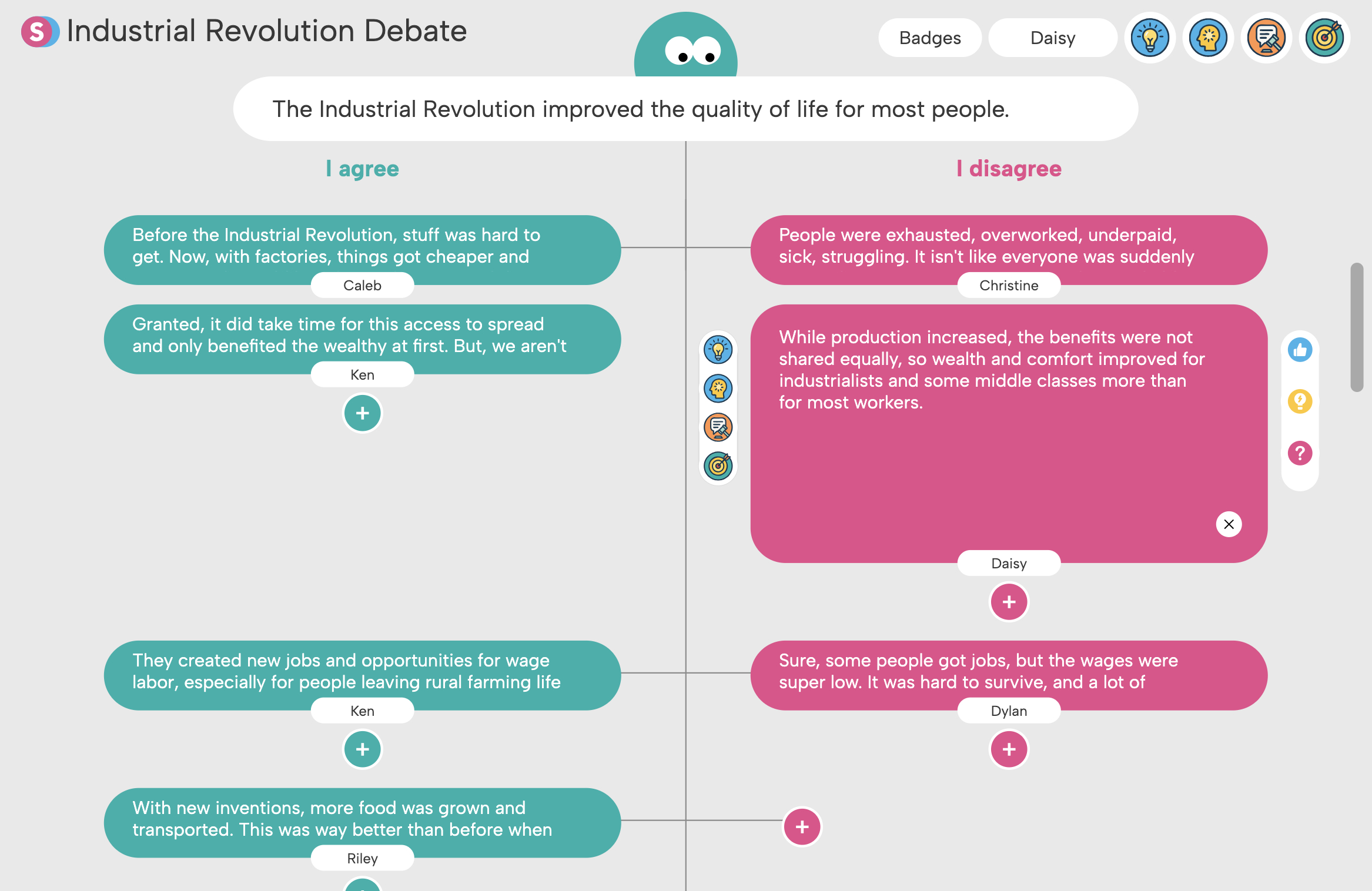
Instead of treating the Industrial Revolution as a list of inventions and dates, the Debate structure helps students analyze it as a question of impact on people’s lives. As they weigh evidence about working conditions, wages, urbanization, and productivity, students build and defend a clear position on whether the Industrial Revolution improved quality of life. What emerges is a broader argument about progress, inequality, and who benefits from economic change. Use this structure in your classroom!
With the benefit of hindsight, students can make sense of these complex moments and better understand why these debates remain unsettled. We hope these structures help bring that kind of thinking into your classroom.