
Resources
Resources
February is Black History Month, an important moment to reflect on the voices and experiences that shaped civil rights history. These three ready-to-launch structures use literature to help students wrestle with ideas and connect with stories that continue to resonate today. Take a look.

This Columns helps students analyze conflict in Melba Patillo Beals’ Warriors Don’t Cry, a memoir chronicling her experiences as one of the Little Rock Nine during school integration in the South. Students examine the conflict through four perspectives, highlighting how each group’s actions shaped the challenges and outcomes of this pivotal moment in history. Use this structure in your classroom!
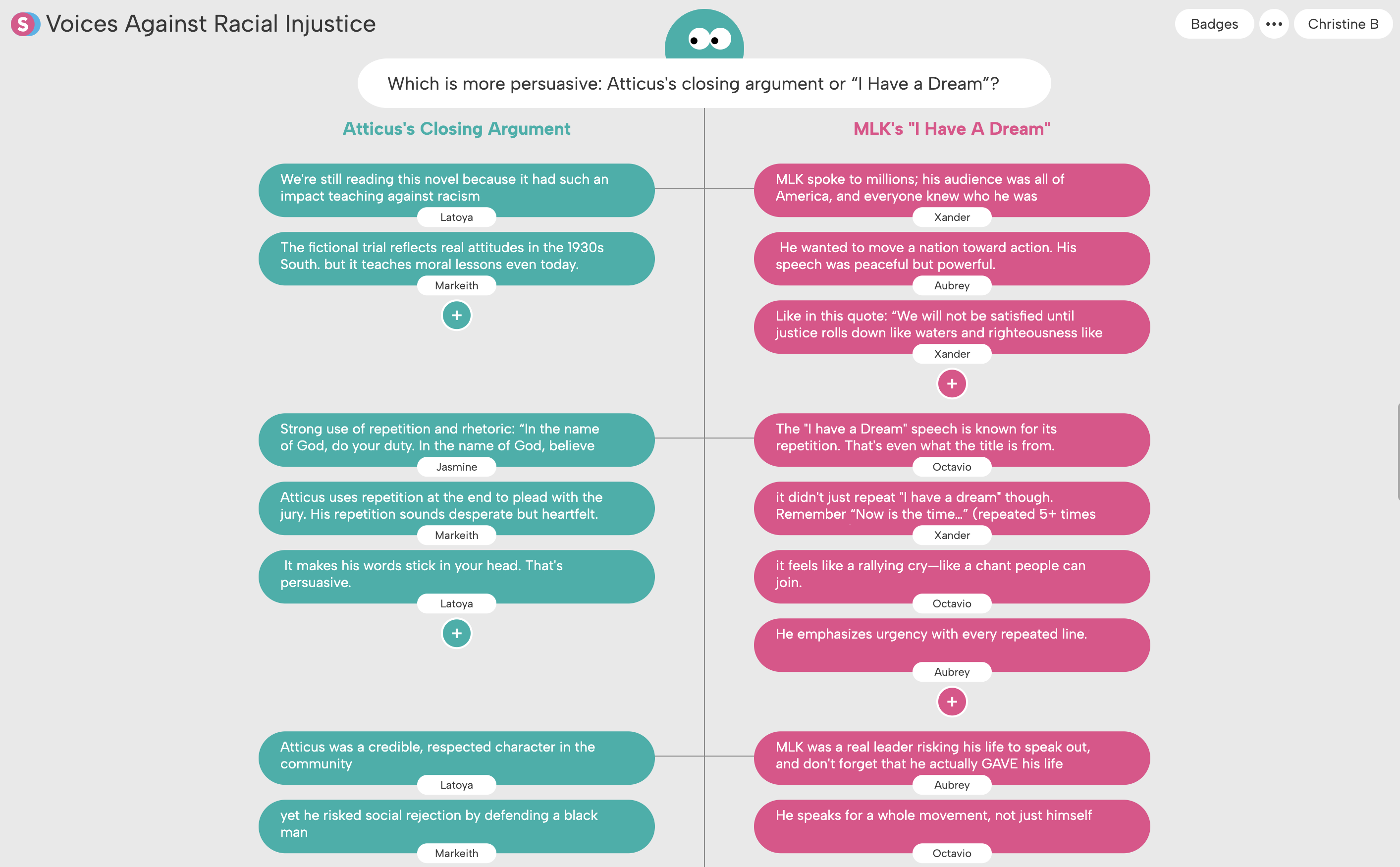
In this Debate, students examine the impact of two iconic speeches—Atticus Finch’s courtroom argument in To Kill a Mockingbird and Martin Luther King Jr.’s "I Have a Dream"—for their rhetorical strategies, historical context, and the ways each speech still resonates with audiences today. Use this structure in your classroom!
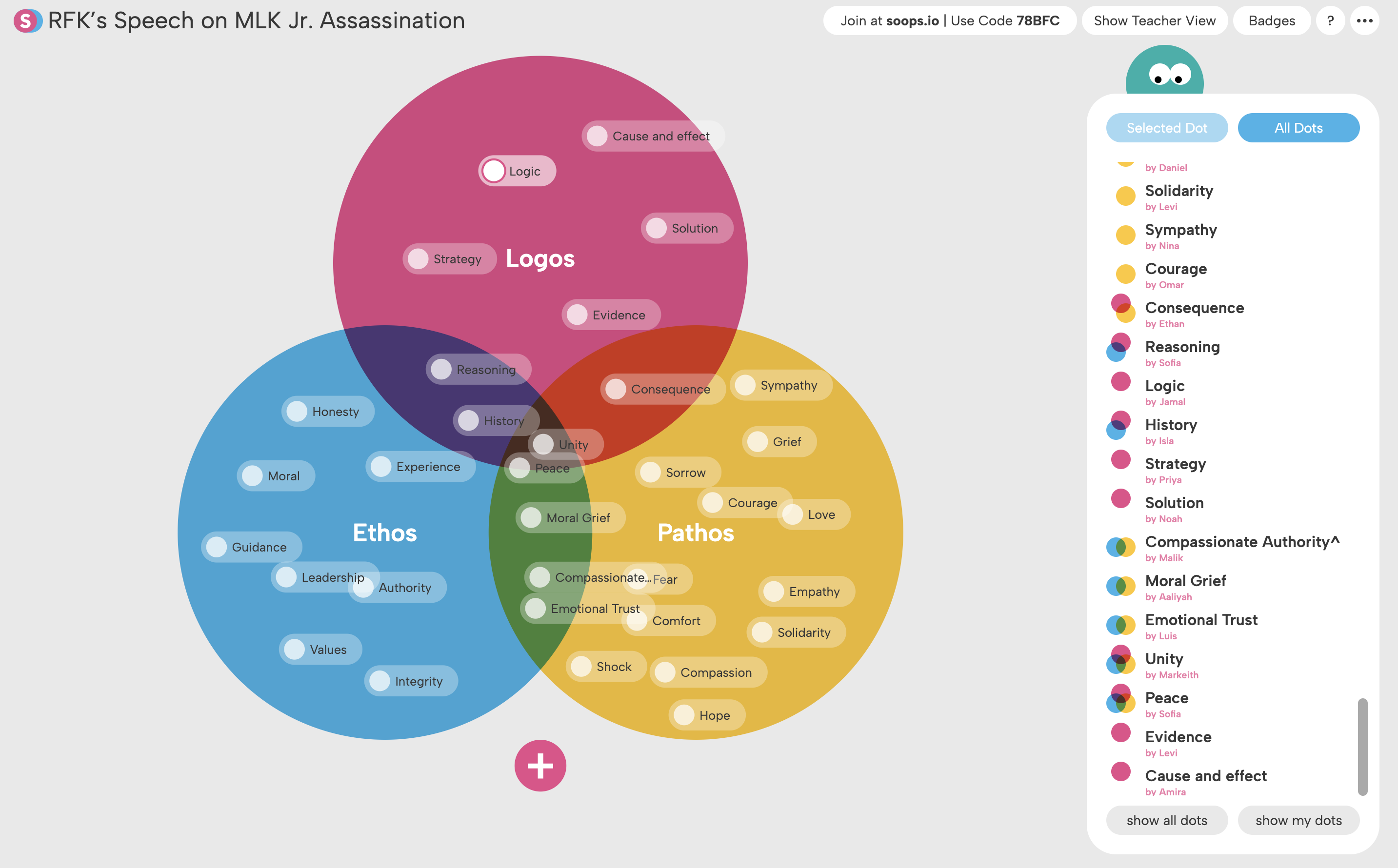
This Venn helps students examine Robert F. Kennedy’s speech after the assassination of Dr. Martin Luther King Jr., focusing on his use of ethos, pathos, and logos. Students analyze, sort, and explain how his words helped a grieving nation and continue to teach lessons about leadership and moral courage. Use this structure in your classroom!
Facilitate these structures in your classroom and let students feel the weight of history, the power of words, and the responsibility of using their own voices with courage and compassion.