
Resources
Resources
Argumentation is not just about having something to say—it's about shaping ideas so they hold up under scrutiny. These three ready to use structures help students develop their argumentation skills, moving from “I think” to “Here is why this is justified.” Take a look.
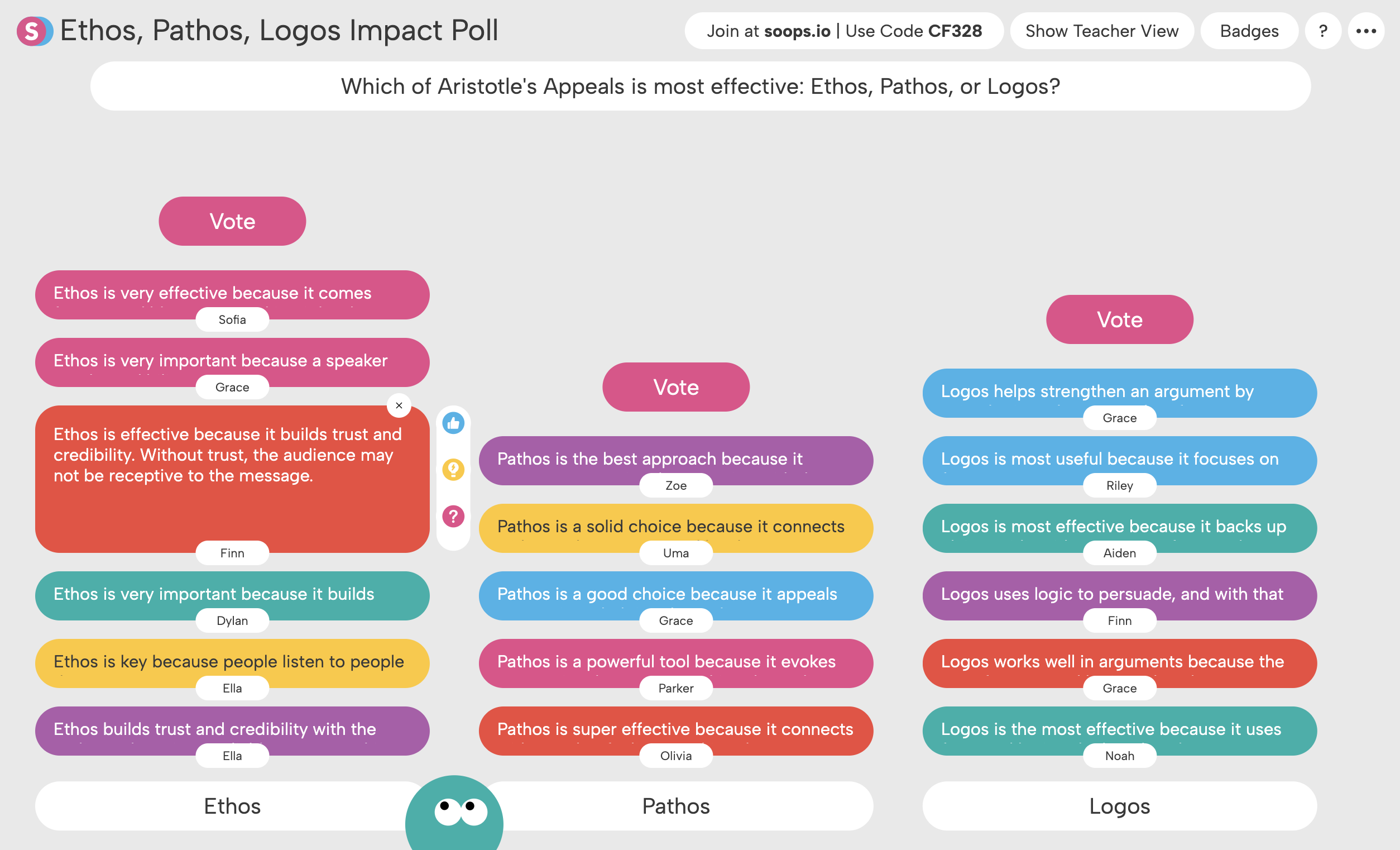
Which of Aristotle’s appeals—ethos, pathos, or logos—is most persuasive? With Poll, every student takes a stance and backs it up with a rationale. What starts as a quick vote quickly turns into a rich conversation about credibility, emotion, and logic—and when each one works best. It’s a low-lift way to get every student thinking like a writer. Use this structure in your classroom!

With Debate, students engage in real-time argumentation and put the elements of strong reasoning into practice—using persuasive rhetoric, making clear claims, responding to peers, and weighing competing ideas. As they build counterarguments and rebuttals, they’re not just defending a position—they’re adjusting their thinking in light of new ideas and evidence. Use this structure in your classroom!
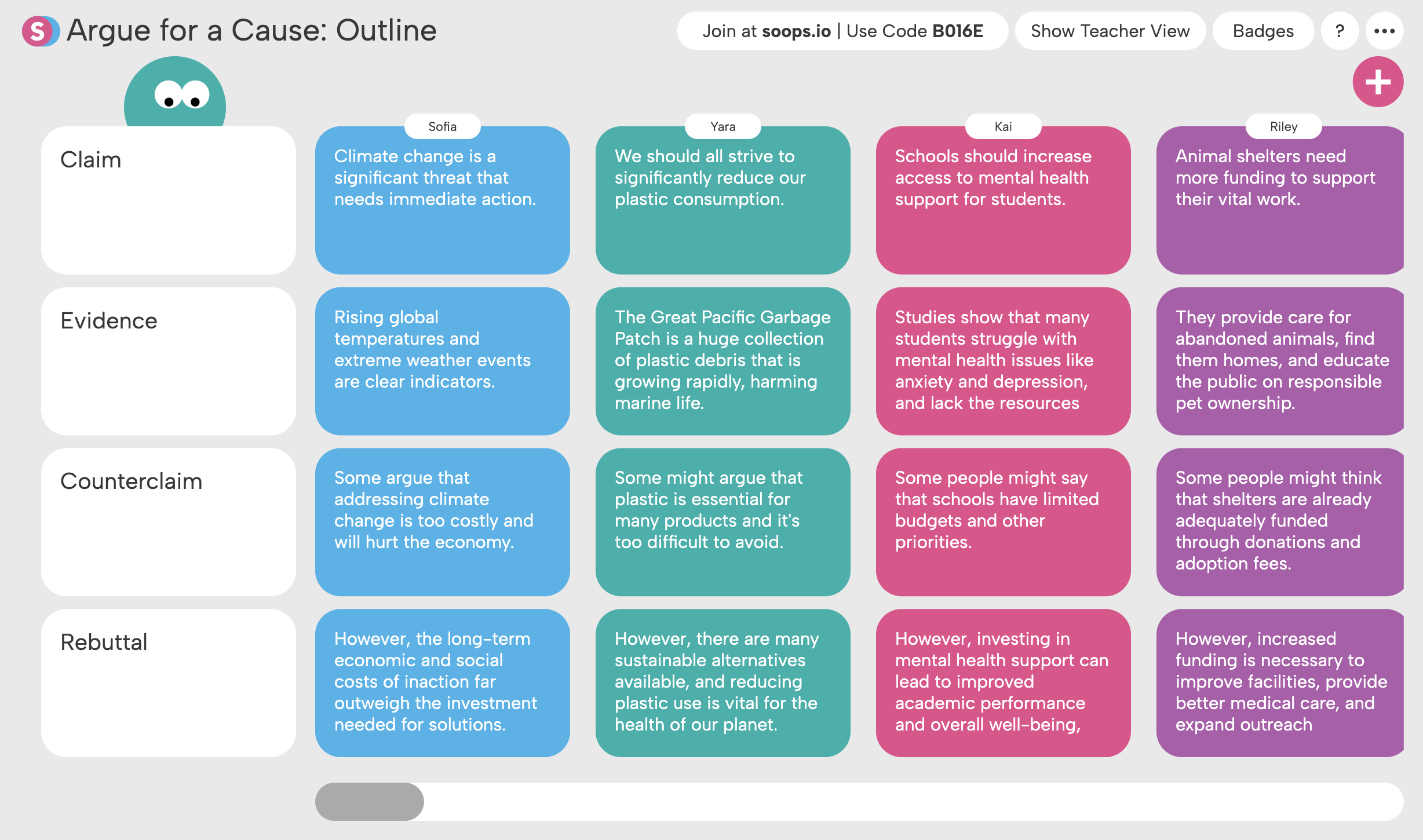
Sequence lets students build their ideas into one coherent essay outline. As they work, they are able to see how their ideas map together, as well as the ideas of their peers—adding new perspectives and helping to refine their own. The result is more than organization—it’s stronger reasoning. Use this structure in your classroom!
From real-time debate to fully built arguments, these structures help students move beyond having strong opinions and do the real work of reasoning.