
Resources
Resources
Ever notice how students can complete an assignment and get it “right” without ever knowing what skill they were supposed to be practicing? Teachers strive to make their learning targets visible—on whiteboards, slides, agendas—so that students see what they are working toward. The real challenge is making sure students find them meaningful—and actually use them as they work. Custom badges solve that problem by embedding learning benchmarks directly into every Superstructure. Each badge represents a skill teachers want to see from students with explanations of what success looks like, turning abstract targets into concrete steps.
Badges act as a live rubric that teachers can align with any concept, lesson, standard, or text. Think of them as a flexible assessment layer inside each Superstructure: teachers set the learning targets, define the performance criteria, and collect skill-level data as students work. Students can see their progress in real time through badge progress bars and earn a built-in “win” when they demonstrate mastery, giving immediate feedback while encouraging deeper thinking.
Custom badges also provide actionable insight for teachers. They can quickly spot patterns in student thinking, see who is still developing certain skills, and identify which skills may need more instruction, all without adding extra grading. Over time, badge data forms a clear record of growth to guide planning, conferencing, or assessment decisions.
To support different kinds of learning targets across subjects, badges fall into two categories: Thinking-Skill Badges highlight transferable cognitive moves across lessons, while Content Knowledge Badges focus on the particular content or concept students are studying. Together, they make both thinking and content expectations visible as students work.
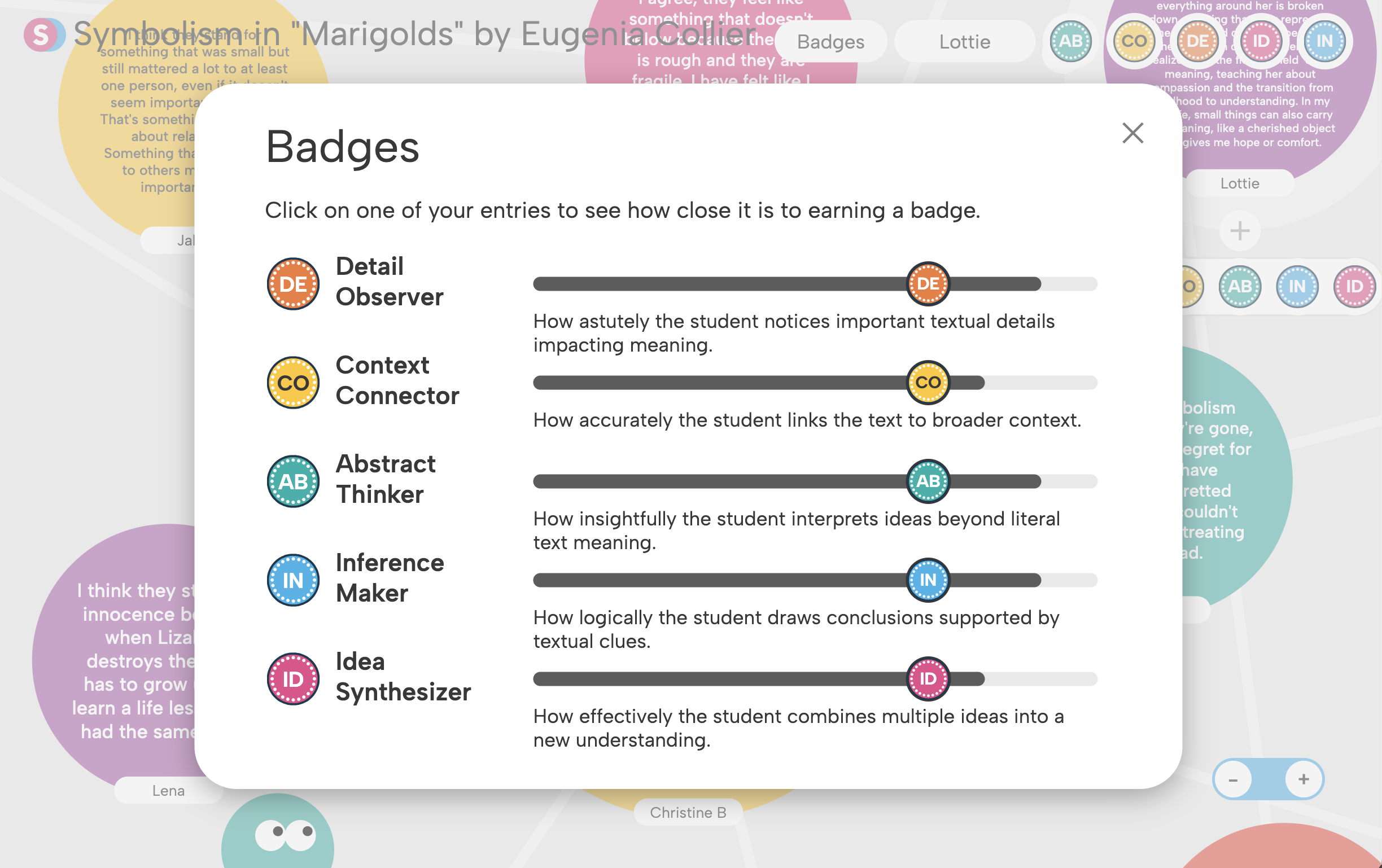
English Thinking-Skill Badges can highlight the kinds of skills strong readers use when analyzing literature. They focus on transferable cognitive moves such as noticing meaningful details, making inferences, and synthesizing ideas across a text. Because they represent ways of thinking rather than content knowledge, teachers can reuse them across novels, poems, articles, and essays throughout the year.

Content Knowledge Badges focus on the particular concept or lens students are studying in a lesson or unit. In a study of conflict in Ray Bradbury’s Fahrenheit 451, badges help students track Montag’s internal struggles, analyze his conflicts with Beatty and the greater society, and examine how those tensions drive the plot and shape the novel’s meaning.

Social Studies Thinking-Skill Badges draw on the thinking moves historians use when analyzing historical and geographic events. They focus on core skills such as sequencing events over time, identifying meaningful causes and effects, recognizing different perspectives, and supporting ideas with specific evidence. Students earn badges by tracing change and continuity, explaining how earlier developments shaped what followed, and making connections across time periods, regions, or themes.
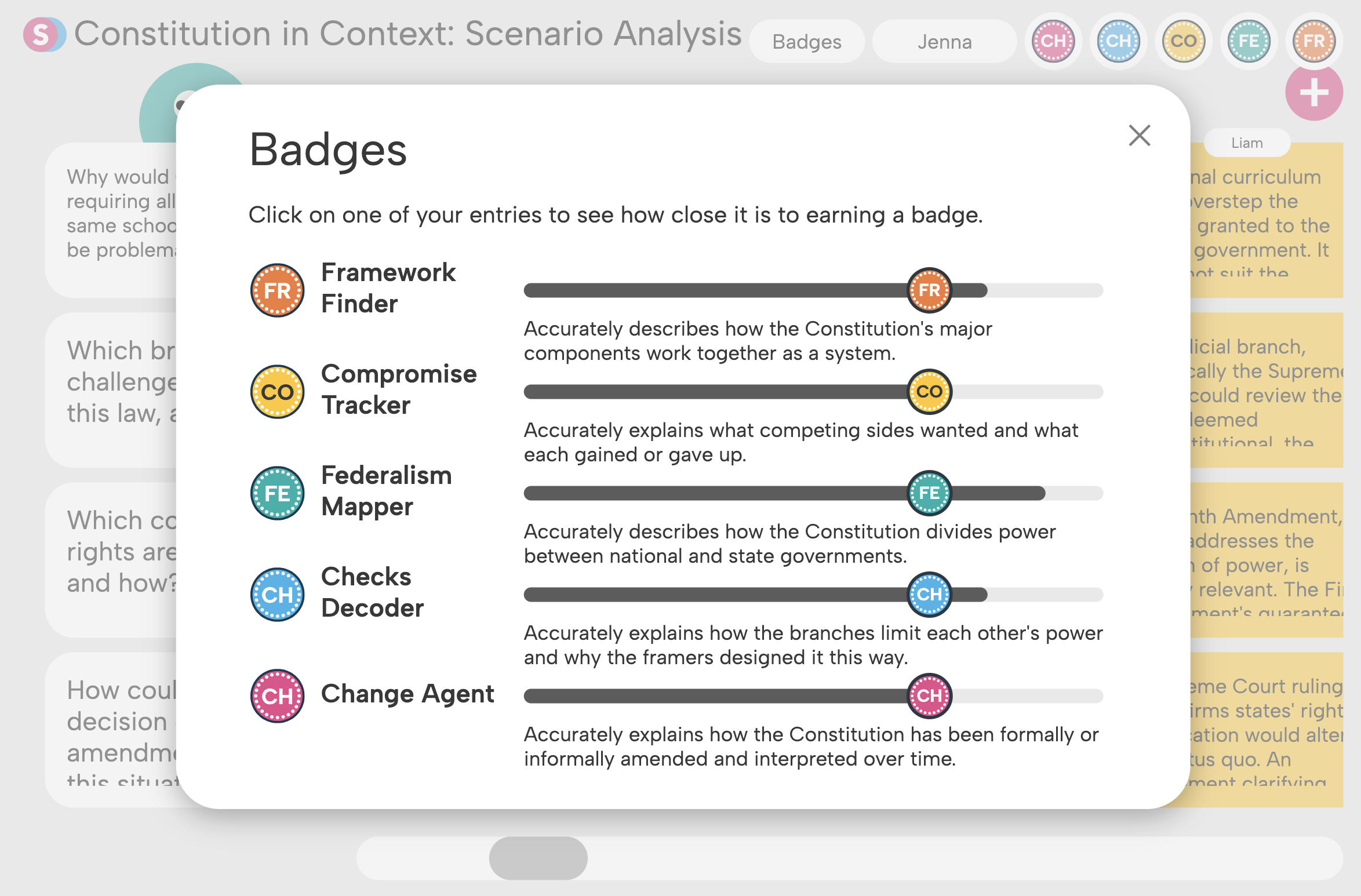
Content Knowledge Badges anchor thinking skills within a particular historical concept or unit. In a Constitution unit, for example, badges guide students to examine how the framers structured government, why compromises were necessary, how federalism divides power, and how constitutional ideas have evolved through interpretation and amendment.
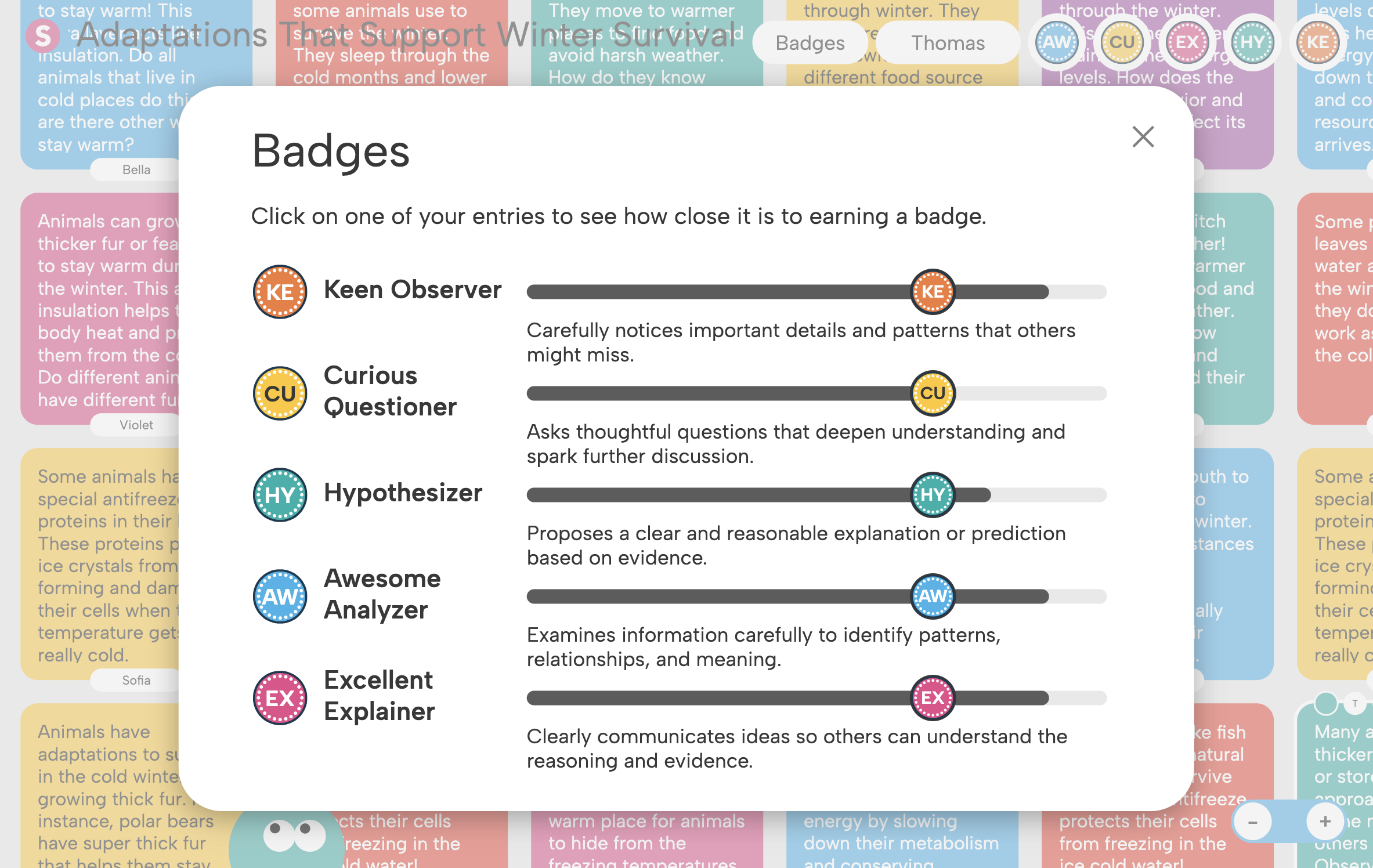
Science Thinking-Skill Badges instill the processes used by scientists when investigating the natural world. They focus on core practices such as observing carefully, asking meaningful questions, forming hypotheses, and analyzing patterns in evidence. Because these skills apply across investigations, teachers can use them throughout labs, discussions, and scientific inquiry activities.
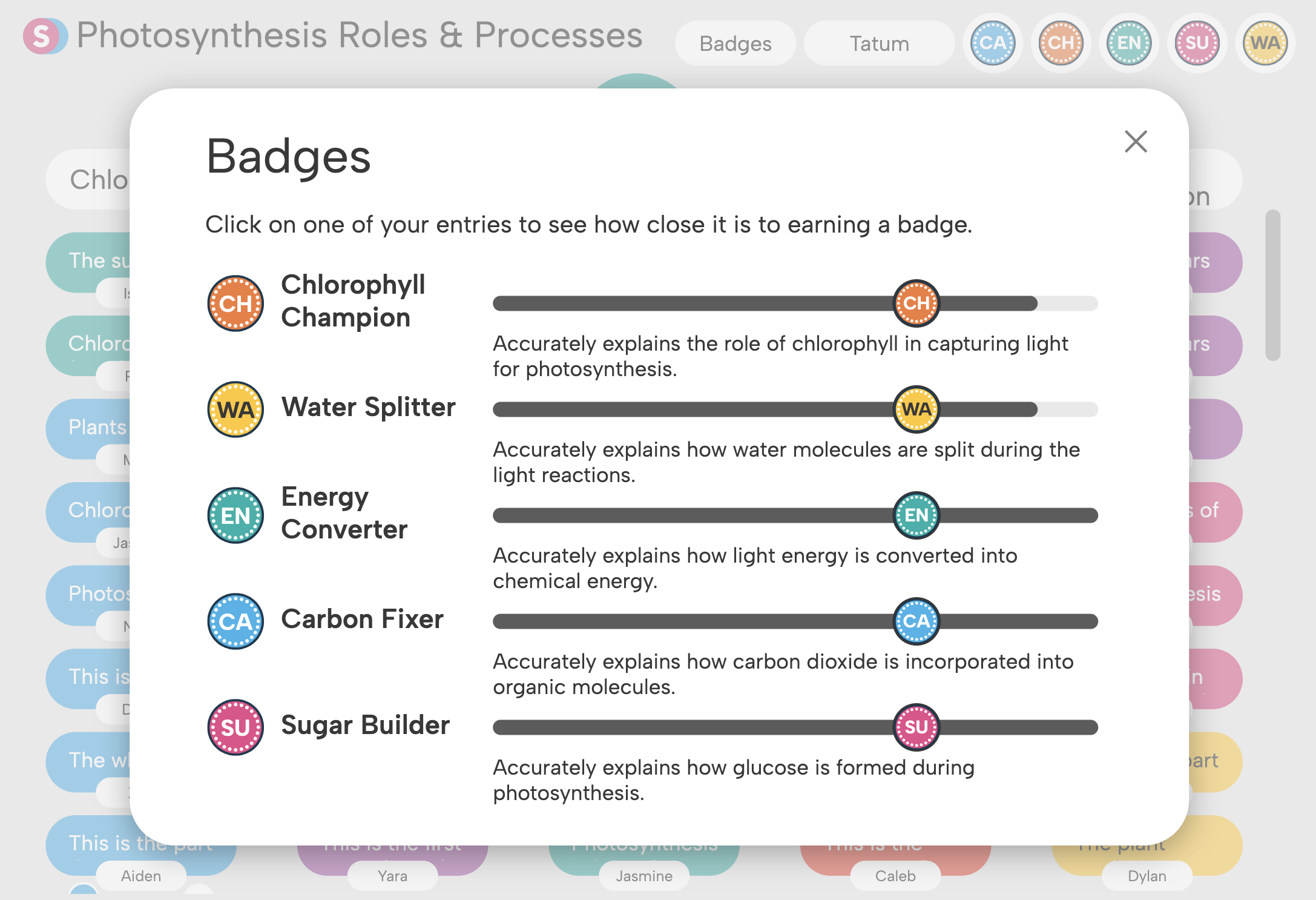
Content Knowledge Badges focus on the essential processes within a particular scientific concept. In a lesson on photosynthesis, badges guide students to explain how chlorophyll captures energy, how water splitting and carbon fixation occur, and how these processes ultimately lead to sugar formation.
In this way, badges extend the idea of a rubric beyond grading at the end of an assignment. They make expectations visible and measurable while students are still working, helping teachers support learning across subjects in the moment rather than after the work is finished.