
Resources
Resources
NGSS crosscutting concepts are central to biology, but they can be difficult to turn into everyday classroom work. These three ready-to-use structures give students a clear way to work with scale, structure and function, and stability and change in class. Take a look.
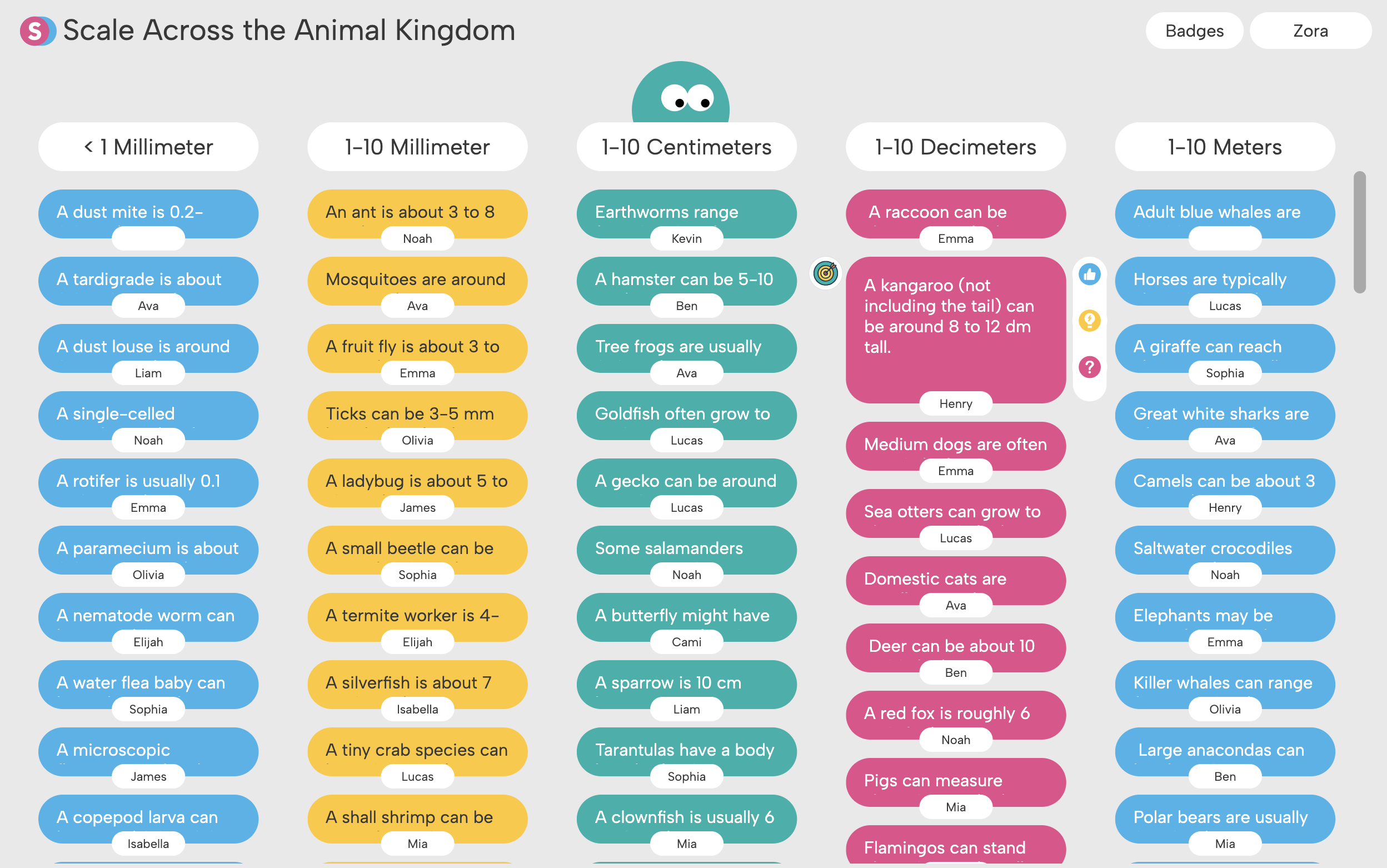
This Columns structure gives students a shared space to think through scale in a way that turns individual ideas into a collective picture. From microscopic to massive organisms, students contribute real-world examples of living things at different scales, building a shared understanding of magnitude across the animal kingdom. Use this structure in your classroom!
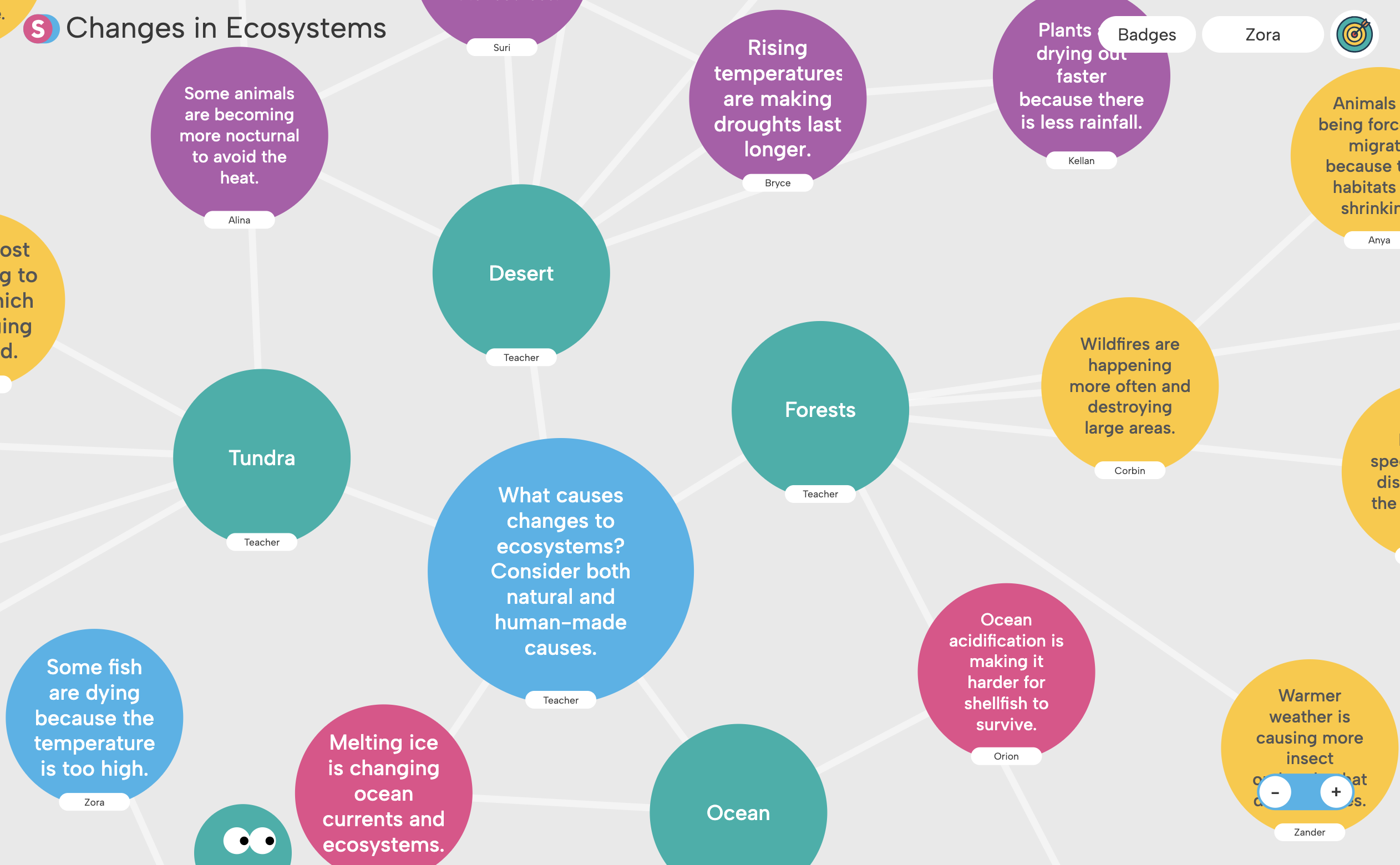
Ecosystem change is shaped by different drivers depending on the environment. Using a Web structure, students identify key drivers within tundra, desert, forest, ocean, and lake systems, and map how those forces connect. As students share their thinking, they build on one another’s ideas to develop a shared model of how ecosystems change over time and the factors that influence those changes. Use this structure in your classroom!
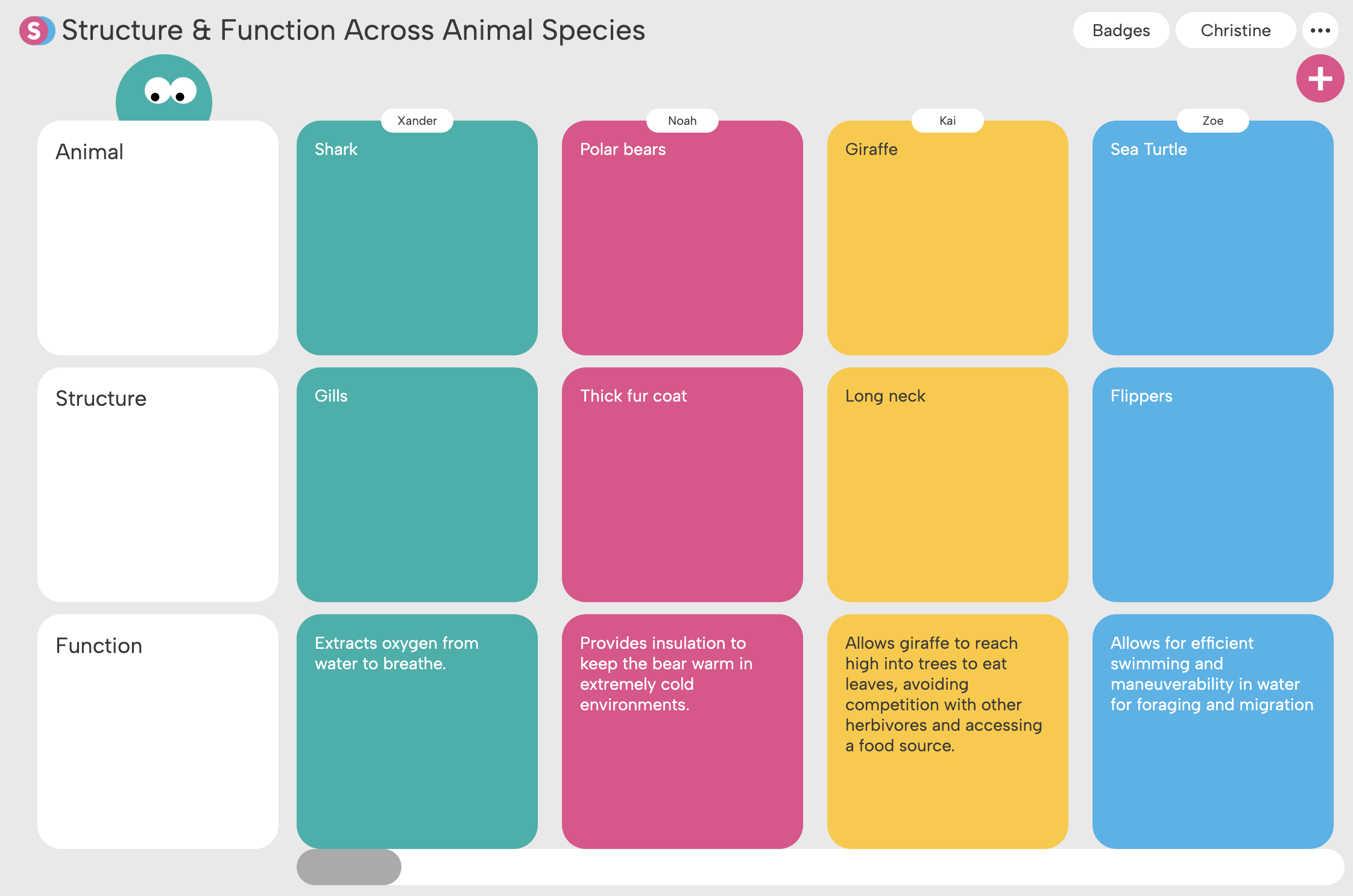
This Sequence lets students explore structure and function across the animal kingdom by selecting an animal, identifying a critical structure, and explaining how it supports their survival. As responses build across the class, students can make sense of an array of biological patterns and how each function supports survival in different environments. Use this structure in your classroom!
When students see these ideas come to life, biology stops feeling like separate concepts in a textbook and starts to feel like one connected way of understanding the world. We can’t wait to see how you bring these lessons to life in your classroom.